Monday, 20 February 2017

GG species - Honey dragon.

One of the most recognisable species in the Gretchen Goosander universe are honey dragons - huge and furry creatures who can shoot an incandescent liquid from their throats to set everything alight. They are in equal parts cute and scary. They have a certain look to them that while not realistically proportioned, still comes across as appealing due to their big eyes, highly emotive faces and shaggy coats.


This cements the stylistic choices of the Gretchen Goosander universe. The creatures are intended to be half-realistic and half-stylised. There are two schools of thought when it comes to creature design: Getting the creature to work in the universe it lives in and look real and getting a creature that looks appealing to the audience. There is a sliding scale of realism v.s. appeal and creatures tend to fit somewhere between the two aspects.

For example, Wayne Barlowe's aliens from "Expedition" tend to be more on the realism side and the creator has thought heavily about the functionality of the creatures than "how cool they look". That's not to say that the aliens don't come with an inherent sense of appeal.


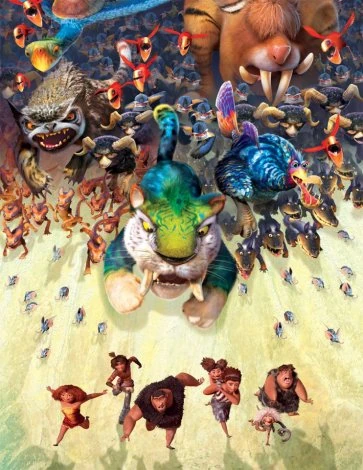
By comparison, the designs from "How To Train Your Dragon" lean more towards being stylised and appealing to the audience, as do creature designs from "The Croods". However, the designers went to great lengths in order to retain the creatures' sense of functionality and believability in their own universe.


My designs would probably fall somewhere between the aforementioned constructs. I also want to go for a very specific kind of appeal, which is one found in films such as "The Neverending Story", "The Dark Crystal" and "Labyrinth". I will be researching into the character designs for these films and also art books and creature design books.

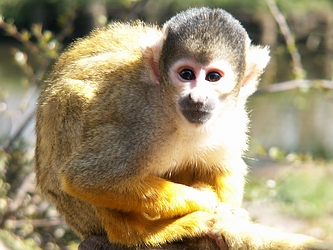
Below are a set of sketches for honey dragons, (mainly Mumbeltrousse who is a main character). I spent a long time figuring out how the feet should be structured. I studied spider monkey faces for the expressions as I feel they are structurally similar to a honey dragon's face.


There is still a lot of ground to be covered with this species, such as how they live (since they come from Madagascar), their hidden form and how they use magic (I am considering their hidden form being a lemur or a tree) and a few other things. But for the most part, I have this species nailed down and I may even start doing a zbrush/photoshop hybrid for these creatures as a test.


Sunday, 19 February 2017

Sketchbook miscellaneous and anatomy analysis.

These are a few sketches I have done without reference. They are a collection of random ideas I used to determine how far I am with my anatomy studies and how much I already know about character design and what I could do to improve them.


I have a particular liking for these goblin head designs. They have a much more coherent shape than a lot of the other doodles I have done and are more widely varied.


The below image demonstrates that I do know at least the basic aspects of constructing a human head, but there are one or two areas where I can become sloppy. More often, the perspective on the face is a little wonky which causes the face to look wrong or I use age signatures that are wrong for that particular face.  


Below are three figures drawn from memory. I quite often find it difficult to draw 'generic' human forms since they can be so widely varied. I am usually unsuccessful with the3/4 view of a human body.

The goat is studied from this image;


Below is a quick outline of basic human proportions just to remind myself of how people are supposed to be proportioned.


I've been having issues thinking of how to structure my learning process. I've come to realise that I cannot be as spontaneous as I would like to be since this is leading to a lot of time being wasted and I am taking a lot of unnecessary steps. What I have decided to do from here is start throwing down designs for my creatures and then analyse what I should do to improve them and how that can be done. From drawing the stigs, I definitely have a weakness when it comes to human and caprinae anatomy. I will probably learn human anatomy firstly in a structured way (probably following Proko's videos) and then start comparing other animal's anatomical structures to that of  human's to see how they deviate or how they are similar.


Saturday, 18 February 2017

GG species - Stigs.


Stigs will eventually be an important species included in the Gretchen Goosander series. They are the world's equivalent to fauns and modernised satyrs (as oppose to the original man/horse satyrs). They have also been merged with glaistigs a little, hence the name "stig". However, stigs are not actually half man and half goat in GG, they just appear that way. Rather, they are their own species that look like anthropomorphised goats with oddly human features and have goats as their hidden form.

There are several variants of stig; Highland stigs, Italian stigs, shigs, sheepies and glaistig. Highland stigs are stupid, violent and extremely tough, capable of losing multiple limbs and still surviving. They can eat almost anything and pick fights often. They live in the Scottish mountains. Italian stigs are the traditional red-skinned fauns. They are the dancing-in-the-forest type and are therefore mocked heavily by highland stigs. A sheepie is similar to a stig, but more sheep-like. They are hardy and often move in a tight group, but also shy and gentle-natured. Highland stigs often start rock fights with them. A shig is a sheepie/stig hybrid. They are often frowned upon and seen as an abomination. Shigs are infertile and are usually killed by the flock. A glaistig is the name given to a female stig, though usually only the ones who like to dress in the traditional green garb as an echo back to their roots.

These were the first ever stig designs I did several years ago.


And here is one of the important characters from GG who is a stig called Billeh who has lost three of his limbs, but still fights. This was also done several years ago.


I did some updated drawings in the last week or so to update their designs after doing much more research. I used a few references to help me with their designs, including references to the sheep from Pixar's "Boundin" which I felt had some similarities to my stig designs.


Images referenced;


I will be revisiting the stigs at a later date after I have done further research for different creatures, but for now I will probably be carrying out research for the anatomy part of this module as my anatomy skills are still fairly weak.


Friday, 17 February 2017

Further notes on GG universe magic and creatures.

I've been having a think about the inner workings of the GG universe and have started to come up with some interesting and simple concepts. These are my thoughts so far relating to how magic works and how to heighten the stakes of it being used, plus the risks/benefits it brings.
  1. Forest magic is a dead giveaway. Forest magic produces a sound that is invisible to most humans, though animals with more sensitive hearing can easily pick it up. Being in a hidden form, even if you cannot be detected by scent or sight, is like blowing an air horn. The good news is that most hidden ones are just hiding from humans so they're happy to take that risk since they usually don't have other natural predators.
  2. Most creatures cannot ingest it. The majority of creatures, even 'fantasy' creatures' can only contain a certain amount of inherent forest magic within themselves. Overusing it can completely destroy their form. Oddly, humans are some of the best adapted creatures for using forest magic, as are cervichauns. A human who ingests too much forest magic is at risk of transforming into something other than a human permanently...
  3. Forest creatures can get stuck in the wrong form. Sometimes, if a forest creature remains in a hidden form for too long, like trying to blend in with the landscape, it may die from starvation, dehydration or its magic quota may run out. This is how unicorns went extinct after they remained as trees for too long.
  4. Magic relies on your level of consciousness. Humans in GG are the most aware creatures of them all, even more so than cervichauns. Humans in GG can reach IQs unheard of in our world. Dragons and other creatures are extremely intelligent, but there are 9 year old humans who can create feats of science which puts dragon intelligence to shame.
  5. Humans now tend to use mechanical magic, sometimes leaking parts of their soul into machines by accident. Mechanical magic seems to be getting a little bit out of control and it is killing forest magic.


Potential groups of species.
  1. Natural earthly species. - These include rabbits, elephants and all other animals we know in the real world. They do not rely on magic to adapt and are fairly hardy all things considered even if they cannot transform. More intelligent species, like humans and dolphins, are capable of using the magic, though humans have forgotten about it entirely and dolphins usually know better. If the magic dies, these creatures will not be affected. Unfortunately humans became far too affiliated with mechanical magic over the years and are now extremely dependant on it.
  2. Species evolved by magic. - These include dragons, faeries and other fantasy creatures that can reproduce naturally. These creatures are built partly on logic and partly on magic. They might seem advanced, but they rely on forest magic a great deal which is a problem since magic is dwindling. Most now flock to magic "hotspots" so that they can continue to live. They can control magic, but not a great deal compared to an artificial species, usually only being able to conjure one hidden form for themselves.
  3. Species born from magic (unnatural species). These species are extremely powerful, but cannot reproduce. Cervichauns and the blood dragon are the two most commonly known types. Too many of these kinds of species means a massive drain on the forest magic supply and therefore they are kept limited in this world. Too many would cause a collapse in the ecosystem.
  4. Auroras - The most powerful species of them all. Really the auroraphrax is the only known aurora species. They are thought to be the ones who brought magic to the world in the first place and it is because of their deaths that the magic is dying. The more of these creatures there are, the more magic there would be in the world, but every other greedy creature has tried to capture and kill auroraphraxes to gain their magic. As a result, there is only one auroraphrax left.
This is a comprehensive list of GG species I have so far;


Phraxai dragons.


Lunarphrax (highland hopping dragon)

Solarphrax (sun dragon, salsa dragon)

Mollaserphrax (honey dragon)

musaphrax (banana dragon)

combaphrax (beach dragon)

Auroraphrax (northern lights dragon)


Sonicaphrax (Jet dragon)


Forest beasts.

Furbull

oddbull

goofbull

screwbull

Howler

Bulbous-nosed heeker

papperdeer

butterbat

Dingbat

Owzley

chuckme

vinker

fenree

falkerdeer

trumber

kelpie

Mizzitflies

swirlybird

twee-twee

Logdog

Pogfrog

whoazies

biffs

Japanese fighting squirrels

gut-guzzling gut-ripper

rockatoodle

svaans

yes-yes

fernfoal


Whistling unicorn


Vorkuu


Bolivian battering bird


Jeckersnapper


Vykurian nightshriek.


Humanoid beasts.


vampire

selkie

Stigs and glaistigs

sheepies

Clover people

Mushroom men

Moss men

Hobbler trolls

sproutlings

jellymaids


loodwouse


Miscellaneous

Peruvian thundersnatch

shadowkin


Moonstalker

Gatekeeper serpent.

Cervichaun

angel spider

sunbird


Sea fury


Book-keeper serpents


There is also a list of species I am purposely omitting from the GG universe as I feel they don't have as much creative potential or I feel like they have been overused. These include;


Elves
Dwarves
Centaurs
Orcs
Zombies (and all other undead species)
Demons and angels
Harpies and banshees
And so on...


Technically, giants and dwarves would exist in GG, but as actual humans rather than another race.

Zbrush temp

Rjjj

SWOT analysis

Strengths - Coming into this project, my strengths include creature design, drawing (generally) and a drive that allows me to be able to do a lot of work when conditions are optimum.


Weaknesses - My weaknesses include understanding human anatomy, understanding animal anatomy, a tendency to get burnt out if I do not manage my projects properly and I am easily distracted. Also, I have only just started using zbrush recently so I know very little in that subject area.

Opportunities - A successful book means an opportunity for income, exposure of my work and advertising to other publishers or potential people interested in my work who would like me to do more.

Threats - The book may not be finished or may not be finished to my intended quality. As I am using Zbrush, the software could potentially crash and I could lose work or it may even damage my hard drive if overloaded.

NSD Contract


Learning agreements.


20% - Learning outcome 1.


20% - Learning outcome 2.


20% - Learning outcome 3.


40% - Learning outcome 4.


Deadlines;


7th April - Learning outcomes 1,2 and 3.
7th May - Learning outcome 4.